Blue Carbon
Blue Carbon: Case Study
Sundarbans mangrove restoration: The measured record, 2020 to 2026
Earthbanc runs multi-methodology carbon project development, designed for quantified biodiversity co-benefits. This page sets out what our Sundarbans delta programme has measured, how the measurement works, and where the record stops. Figures are current to September 2026.
Blue finance is bottlenecked by evidence, not by capital
Coastal restoration competes for capital against assets that report continuously. A five-year verification cycle asks an investment committee to hold a position for half a decade on a single data point, and most committees decline. Continuous measurement changes what the committee is being asked to underwrite, which is the proposition the Sundarbans programme was built to test.
Measure | Value |
|---|---|
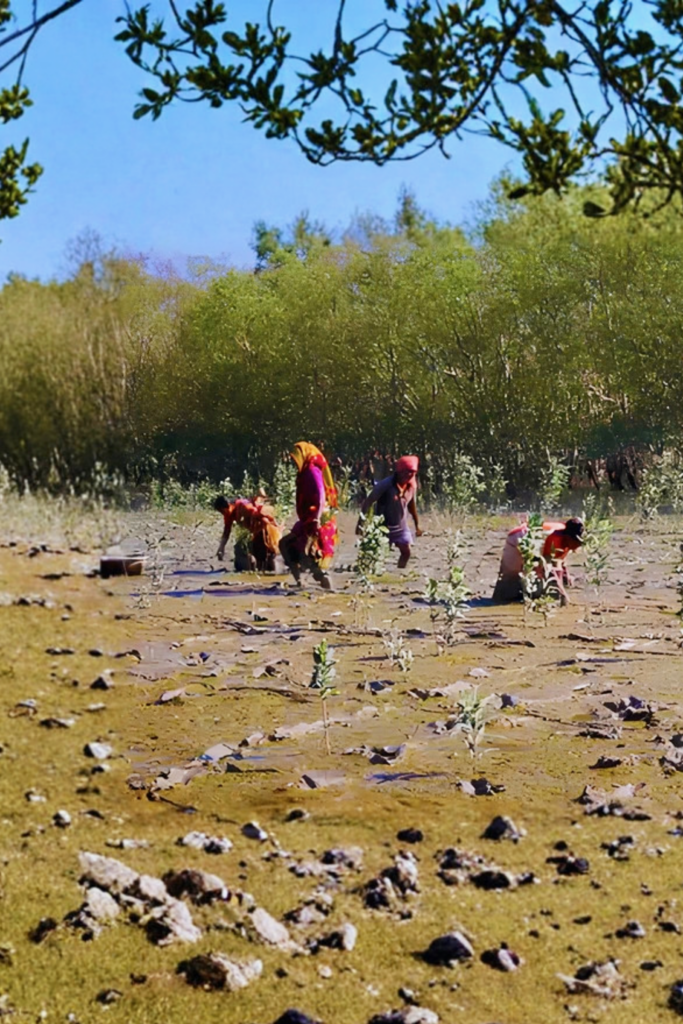
Total area restored | 16 ha |
Trees planted | 38,000 |
Trees surviving | 30,400 |
Survival rate | 80% |
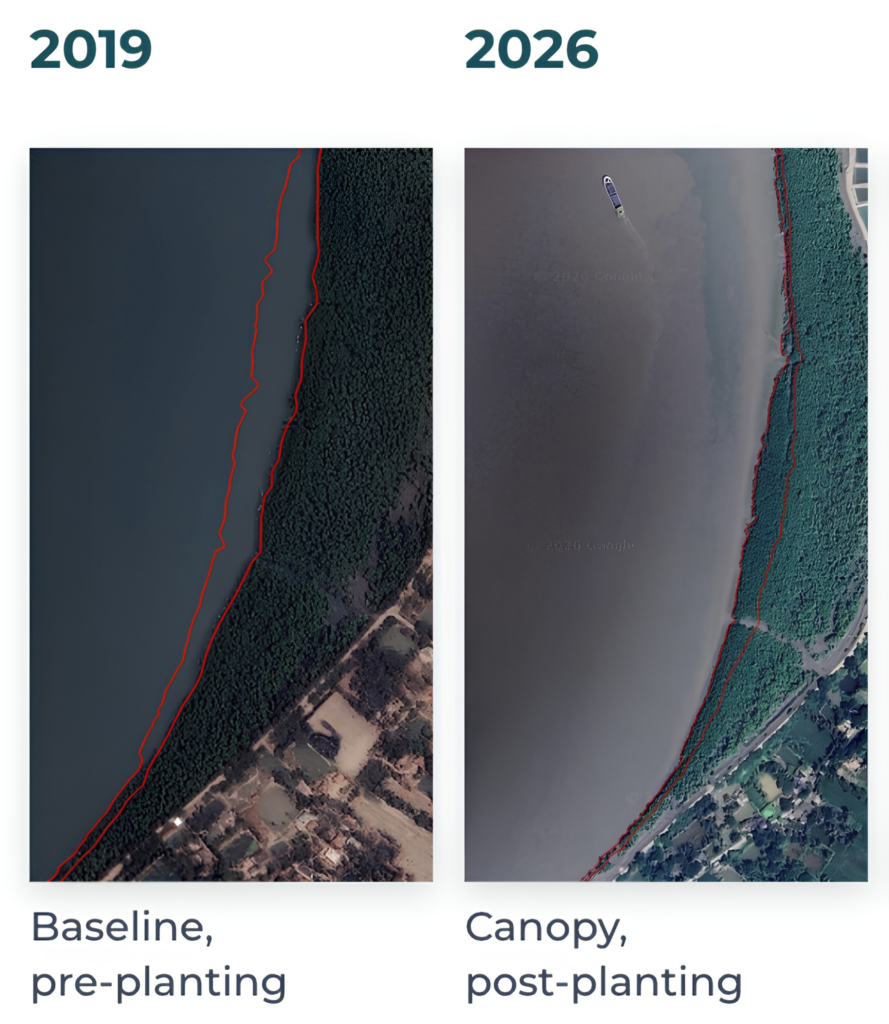
Growth period measured | 6 years (2020 to 2026) |
Estimated sequestration | ~2,500 tonnes CO2e over the project period |
Estimates pending verification. Site-specific results, not a projection.
Why defendable numbers are important
All verifiers ask where figures came from. With our full stack of software, Earthbanc is able to provide five collaborating records, each independently timestamped and each tied to a parcel identifier that follows the site from first screen through to issuance:
- Geotagged field photography
- Species and survival assessments
- Time measured parcels (polygon and area mapping)
- Canopy and biomass models
- Issuance records
Carbon is measured by remote sensing against field ground truth, rather than read off a look-up table. Our tools are set up to support offline-first capture, because the geographies where the bulk of restoration happens do not always have reliable signal.
The fisheries bonus dividend
Juvenile penaeid shrimp depend on mangrove nursery habitat, so restoring the mangrove supports the fishery habitats sharing coastlines. Restoration projects must ensure three mechanisms operate at once:
- Mangrove roots and detritus form the nursery habitat juvenile shrimp occupy before moving offshore.
- Root systems filter and stabilise pond water, cutting the feed and chemical inputs farms rely on.
- Silvofishery lets communities keep harvesting shrimp, crab and fish while the mangrove regrows.
Published figures from the mangrove-fishery literature, quoted as ranges because the sources are older and unadjusted for inflation:
Key Figures | What it measures |
|---|---|
$750 to $16,750 per ha per year | Annual value of capture fisheries supported by mangroves (Rönnbäck 1999) |
2× | Shrimp harvest reported in mangrove-integrated pond designs |
$135 per ha per year | Marginal value to offshore production, Thailand (Barbier 2007) |
One monitoring dataset supports both the carbon report and the fisheries report. The two revenue streams differ in kind, a carbon issuance and a harvest, rather than two claims on the same attribute.
Working with us on silvofishery
Earthbanc is recruiting silvofishery and coastal aquaculture partners for MRV-backed pilot projects. The fit we are looking for is an operator already producing on or beside a degraded mangrove system, where restoration can proceed without asking the community to stop earning during it.