Earthbanc 2022 Highlights: Media, News, Podcasts, and More!
Earthbanc achieved significant milestones in 2022 that we are proud of. Here are some of the highlights!
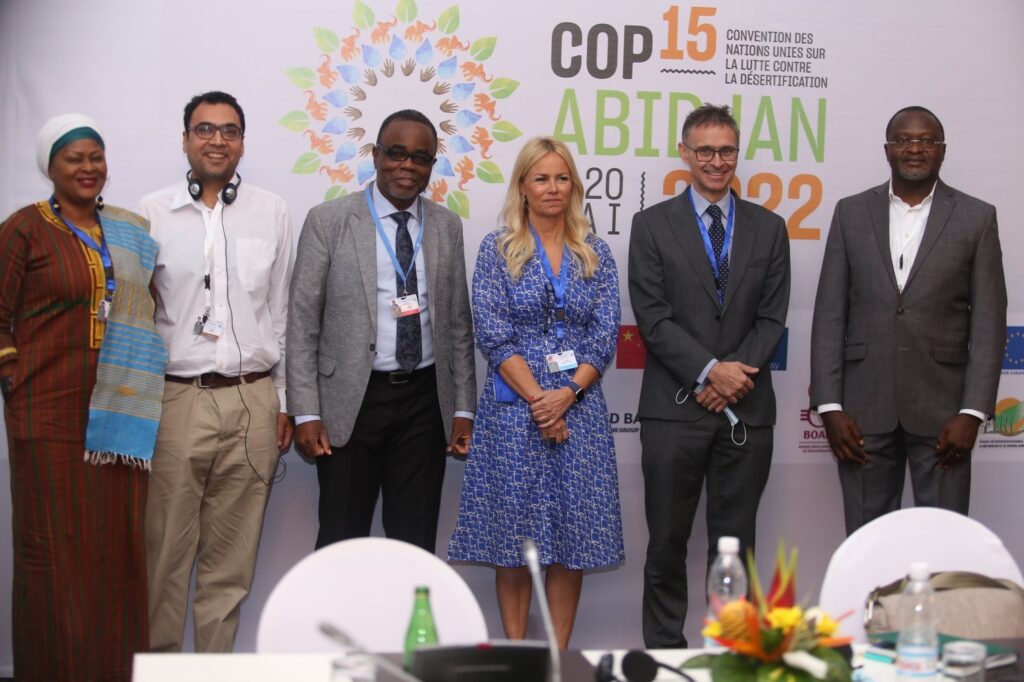
- 🚀 Our joint effort with the UNCCD and NGO partners now covers a pipeline of up to 100 million hectares of land for carbon removal projects.
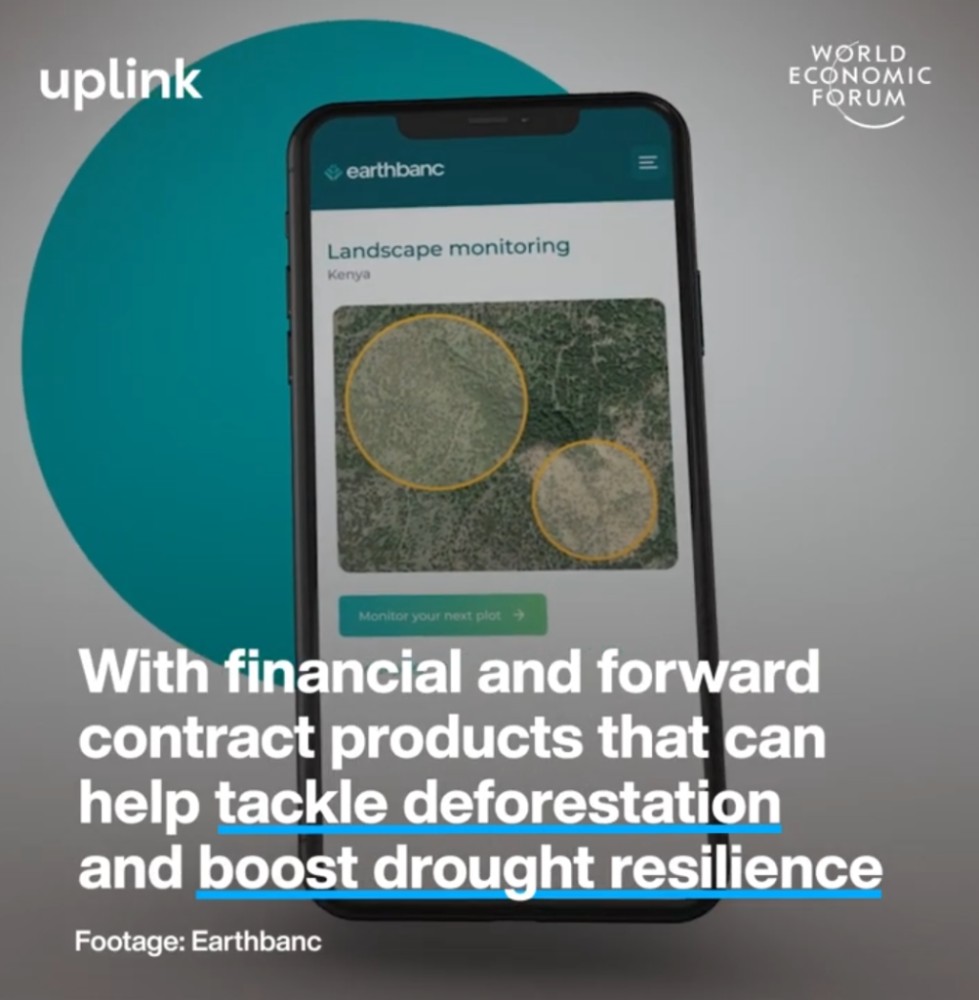
We launched the world’s first climate fintech partnership with the United Nations Convention to Combat Desertification on land restoration and carbon finance that integrates innovative forward contracts and digital MRV for the Great Green Wall of Africa and large scale land restoration in India. The Earthbanc MRV App now has more than 4,000 users from NGOs, farmers, land stewards and businesses covering over 90,000 Hectares of land where we are financing and coordinating reforestation and agroforestry.
We are excited to share Earthbanc growth metrics for 2022:
– increased our carbon projects under development 7-fold
– increased our user base by 10-fold
– user growth was about 100% month on month.

Earthbanc mission is planetary regeneration to stabilise the biosphere and atmosphere, and nothing less. We have built a platform that is financing carbon projects across 100 million hectares by leveraging digital MRV, AI and web3 to scale climate solutions. Carbon offsetting is just one part of a much larger picture when it comes to reaching net zero. Regenerative Finance (ReFi) represents an economic evolution in both mindset and technology that can enable the rapid scaling of climate action required. To achieve our 2030 target of halving current emissions, the State of Climate Action 2021 report calls for a “near doubling of the pace of action”. It states that $5 trillion USD in climate finance is needed annually to reach our 2030 emissions targets.
ReFi is emerging as a key player in innovative climate finance, bridging cryptocurrency and climate action and aligning incentives to enable millions of people to take climate action. With just a few clicks of a mouse they can become a part of meaningful action and be financially rewarded for it.
What is regenerative finance (ReFi)?
ReFi uses money as a tool to solve systemic problems by changing the underlying story that sits beneath our current economic model. It values the accumulation of money and wealth that often comes at the expense of people and planet. ReFi instead uses capital to create healthy and equitable social and environmental systems. To meet our planetary crises of climate change, biodiversity loss and ecosystem collapse, the story underpinning our economic system needs to change.
Enter ReFi. It brings a different story to economics, one where value is considered within the context of the whole and profits are used to regenerate our planet’s ecosystems so they can continue to sustain life, and address our pressing social issues of injustice and inequity. The story of ReFi is circular. It reminds us that money is a human invention — it’s a concept — and it’s not money that is the problem but the current design of money. A central tenet of ReFi is to re-imagine and re-design money and the systems it moves through.
ReFi is grounded in regenerative economics
Regenerative economics is a new philosophical model that advocates for economic-system design to be based on “the universal patterns and principles the cosmos uses to build stable, healthy and sustainable systems”.
In 2017 Tom Duncan, CEO of Earthbanc, developed a simple narrative about how it would function from a first principles basis, meaning the core truths regenerative economics would be built from.
‘Regenerative’ means compensating, and more, for all negative externalities
Being regenerative economically means every activity in the economy that extracts and degrades ecological, human and community health requires a greater regenerative activity that not only compensates for the extraction — but also creates a net improvement in those biophysical indicators.
We can conceive of it in another way using economics vernacular — every negative externality requires a greater positive externality. Generally the source of the negative externality should be the responsible party to fund or carry out the regenerative activity, i.e. the ‘polluter pays’ principle.
Negative externalities have failed to be appropriately accounted for
Traditionally these outcomes would have only been achieved if a government taxed the negative externalities and redistributed the funds to replenish that which was extracted or degraded. Sadly, this principle has only been established in some countries and the overwhelming approach of our economic system is for negative externalities to be absorbed not by the producer, but by the rest of the planet, with negative externalities felt both locally and also globally as diffuse crises — such as climate change.
One of the tragedies of our times is that rates of extraction far outpace regeneration, particularly in regard to the exponentially growing technology commons, and Earth Overshoot Day arrives earlier each year — the annual calendar date each year when humanity’s resource-use has gone beyond what the planet can regenerate in that same year.
Transitioning to a circular economy
Regenerative economics maps a transition pathway to a circular economy that replaces our current linear ‘take-make-waste’ economy.
A circular economy is a systemic approach to economic development designed to benefit businesses, society, and the environment whilst living within planetary boundaries. It is regenerative by design and aims to gradually decouple growth from the consumption of finite resources. In a circular economy, just as in our current economy, shared perceived value drives profit — meaning that regenerative activities can become core business and finance activities.
ReFi is shifting the economy
The ReFi movement is about making positive change possible, with the financial return as a by-product. Money becomes a means and not an end. Incentives in our current economic system are predominantly set to maximise profits whilst socialising negative impacts.
ReFi changes the incentives from to positive externality maximisation for activities that repair, regenerate and heal, while also enabling capital to reach the communities most affected by negative externalities to adapt, mitigate and thrive.
Technology enables ReFi
Web3 is the third evolution of the internet characterised by blockchain technology that enables internet-native money. This form of finance sits outside of the conventional design of money. ReFi uses incentives created through newly designed markets built upon new web3 regenerative finance infrastructure. Programmable blockchain modules combined with AI, satellite and remote sensing data processing with distributed computational power means that today a farmer could deliver regenerative land and water management outcomes to regenerate the damage done by a food manufacturer and their associated negative externalities.
The positive externalities created by the farmer are a regenerative physical asset that can be tokenised in order to track, store and apply their value within the ReFi economy. In this ReFi example, the regenerative land management outcomes are minted by Earthbanc as eco-credits on Regen Network’s ledger and its meta-registry, which can then be sold. Companies such as Microsoft and large investment platforms currently buy carbon credits from Regen Registry, which is produced by a team of regenerative actors, including developers, ecologists and scientists.
New players and accelerated adoption of ReFi economics
Regen Network and their super fast Regen Ledger layer one blockchain enables new eco-credit classes to be created by the open source science community for regenerative activities, and is incentivising the new economics we described above. The key question we now turn to is how do these activities get financed and leverage investment markets to accelerate adoption, beyond the carbon and eco-credits being purchased by companies already committed to net zero and being Earth positive? Massive adoption and scaling is required to realise the exponential decarbonisation roadmap, particularly by 2030.
Enter Earthbanc — the ReFi app that finances carbon credit projects with Sustainable Land Bonds on Regen Ledger, enabling the next one billion unbanked farmers and land stewards to access the world’s first ‘carbon bank’, and connecting investors of all types to regenerative projects. Earthbanc has signed a world-first partnership with the United Nations Convention to Combat Desertification (UNCCD) to finance 100M hectares of land restoration — which we will share the details of in our next blog.
The regenerative finance revolution is just getting started! Stay tuned for more on ReFi and green investing from Earthbanc.
May, 2022
🎤 Carbon and Finance Platform Earthbanc Raises $1.5 Million Pre Seed Round

SAN FRANCISCO, April 05, 2022 (GLOBE NEWSWIRE) — Earthbanc the leading carbon credit and finance platform headquartered in Stockholm with operations across 20 countries, raised a US $1.5M investment in a Pre-Seed Round with participation from Regen Network Development Inc (USA), Rampersand VC (Australia), Visive Capital (EU), Katalista Ventures (Lithuania), Sting Accelerator (Sweden), clients of Jindabyne Capital and Kaai Capital (Australia), European Space Agency Incubator (Sweden) and Regenerative Ventures Holdings (USA). Earthbanc develops carbon projects, sells verified and audited carbon credits, and enables investors to finance carbon removal. The company has audited the carbon stocks of over 13M hectares of forest globally using satellites and proprietary remote sensing technology.
“We welcome the investment from Regen Network Development Inc and Rampersand VC to accelerate the growth of the Earthbanc Protocol platform. We are excited to scale up carbon markets with our technology and onboard millions of farmers around the world to help them monetize their carbon, and give investors access to this fast-growing asset class.” – Earthbanc CEO, Tom Duncan
Regen Network Development Inc CEO, Gregory Landua, said: “Regen Network invests in the best regenerative finance (ReFi) ventures to scale faster. The Earthbanc platform is built for the next 1 billion people coming out of poverty through regenerative agriculture, carbon payments, and regenerative payments – enabling capital to flow where it’s needed to achieve planetary regeneration and stabilize the climate. The Earthbanc app will provide a carbon bank with accessible on and off fiat ramps for users globally, particularly for the unbanked, bringing the next billion users into the regenerative finance revolution.”
“The Earthbanc team has extensive experience in regenerative finance markets, with a demonstrated capability and commitment to the community and environment. Earthbanc’s tier-one relationships with leading NGOs, together with proprietary automation and remote sensing technology, deliver huge value in the fast-growing climate finance and nature-based solution (NbS) carbon markets. Equally important is that Earthbanc provides a win-win outcome to farmers through global carbon market access and meaningful carbon sequestration projects.” -Nicole Small, Investment Director at Rampersand VC
Source: Carbon and Finance Platform Earthbanc Raises $1.5 Million Pre Seed Round
ABOUT EARTHBANC
Earthbanc is pioneering a carbon credit and finance platform that leverages machine learning and MRV technology. On the Earthbanc platform, you can purchase fully audited carbon credits, or choose to invest in carbon removal. The company’s investment thematics include land restoration, regenerative agriculture, agroforestry, blue carbon and large-scale reforestation. Earthbanc’s climate fintech innovation was recognized when it won the Trillion Trees Challenge in 2022, the Mastercard Lighthouse FINITIV program in Spring 2021 and the Rockit Impact Best Product Award for its work with Swedbank. The company is now scaling up it’s nature based carbon removal projects with over 100 million hectares in it’s pipeline.
For additional information, please visit our website.
Do you have any questions or comments? Please add them below, we’d love to hear your thoughts.
Thank you for your support, we really appreciate it.
– Tom & the Earthbanc Team

Earthbanc mission is planetary regeneration to stabilise the biosphere and atmosphere, and nothing less. We have built a platform that is financing carbon projects across 100 million hectares by leveraging digital MRV, AI and web3 to scale climate solutions. Carbon offsetting is just one part of a much larger picture when it comes to reaching net zero. Regenerative Finance (ReFi) represents an economic evolution in both mindset and technology that can enable the rapid scaling of climate action required. To achieve our 2030 target of halving current emissions, the State of Climate Action 2021 report calls for a “near doubling of the pace of action”. It states that $5 trillion USD in climate finance is needed annually to reach our 2030 emissions targets.
ReFi is emerging as a key player in innovative climate finance, bridging cryptocurrency and climate action and aligning incentives to enable millions of people to take climate action. With just a few clicks of a mouse they can become a part of meaningful action and be financially rewarded for it.
What is regenerative finance (ReFi)?
ReFi uses money as a tool to solve systemic problems by changing the underlying story that sits beneath our current economic model. It values the accumulation of money and wealth that often comes at the expense of people and planet. ReFi instead uses capital to create healthy and equitable social and environmental systems. To meet our planetary crises of climate change, biodiversity loss and ecosystem collapse, the story underpinning our economic system needs to change.
Enter ReFi. It brings a different story to economics, one where value is considered within the context of the whole and profits are used to regenerate our planet’s ecosystems so they can continue to sustain life, and address our pressing social issues of injustice and inequity. The story of ReFi is circular. It reminds us that money is a human invention — it’s a concept — and it’s not money that is the problem but the current design of money. A central tenet of ReFi is to re-imagine and re-design money and the systems it moves through.
ReFi is grounded in regenerative economics
Regenerative economics is a new philosophical model that advocates for economic-system design to be based on “the universal patterns and principles the cosmos uses to build stable, healthy and sustainable systems”.
In 2017 Tom Duncan, CEO of Earthbanc, developed a simple narrative about how it would function from a first principles basis, meaning the core truths regenerative economics would be built from.
‘Regenerative’ means compensating, and more, for all negative externalities
Being regenerative economically means every activity in the economy that extracts and degrades ecological, human and community health requires a greater regenerative activity that not only compensates for the extraction — but also creates a net improvement in those biophysical indicators.
We can conceive of it in another way using economics vernacular — every negative externality requires a greater positive externality. Generally the source of the negative externality should be the responsible party to fund or carry out the regenerative activity, i.e. the ‘polluter pays’ principle.
Negative externalities have failed to be appropriately accounted for
Traditionally these outcomes would have only been achieved if a government taxed the negative externalities and redistributed the funds to replenish that which was extracted or degraded. Sadly, this principle has only been established in some countries and the overwhelming approach of our economic system is for negative externalities to be absorbed not by the producer, but by the rest of the planet, with negative externalities felt both locally and also globally as diffuse crises — such as climate change.
One of the tragedies of our times is that rates of extraction far outpace regeneration, particularly in regard to the exponentially growing technology commons, and Earth Overshoot Day arrives earlier each year — the annual calendar date each year when humanity’s resource-use has gone beyond what the planet can regenerate in that same year.
Transitioning to a circular economy
Regenerative economics maps a transition pathway to a circular economy that replaces our current linear ‘take-make-waste’ economy.
A circular economy is a systemic approach to economic development designed to benefit businesses, society, and the environment whilst living within planetary boundaries. It is regenerative by design and aims to gradually decouple growth from the consumption of finite resources. In a circular economy, just as in our current economy, shared perceived value drives profit — meaning that regenerative activities can become core business and finance activities.
ReFi is shifting the economy
The ReFi movement is about making positive change possible, with the financial return as a by-product. Money becomes a means and not an end. Incentives in our current economic system are predominantly set to maximise profits whilst socialising negative impacts.
ReFi changes the incentives from to positive externality maximisation for activities that repair, regenerate and heal, while also enabling capital to reach the communities most affected by negative externalities to adapt, mitigate and thrive.
Technology enables ReFi
Web3 is the third evolution of the internet characterised by blockchain technology that enables internet-native money. This form of finance sits outside of the conventional design of money. ReFi uses incentives created through newly designed markets built upon new web3 regenerative finance infrastructure. Programmable blockchain modules combined with AI, satellite and remote sensing data processing with distributed computational power means that today a farmer could deliver regenerative land and water management outcomes to regenerate the damage done by a food manufacturer and their associated negative externalities.
The positive externalities created by the farmer are a regenerative physical asset that can be tokenised in order to track, store and apply their value within the ReFi economy. In this ReFi example, the regenerative land management outcomes are minted by Earthbanc as eco-credits on Regen Network’s ledger and its meta-registry, which can then be sold. Companies such as Microsoft and large investment platforms currently buy carbon credits from Regen Registry, which is produced by a team of regenerative actors, including developers, ecologists and scientists.
New players and accelerated adoption of ReFi economics
Regen Network and their super fast Regen Ledger layer one blockchain enables new eco-credit classes to be created by the open source science community for regenerative activities, and is incentivising the new economics we described above. The key question we now turn to is how do these activities get financed and leverage investment markets to accelerate adoption, beyond the carbon and eco-credits being purchased by companies already committed to net zero and being Earth positive? Massive adoption and scaling is required to realise the exponential decarbonisation roadmap, particularly by 2030.
Enter Earthbanc — the ReFi app that finances carbon credit projects with Sustainable Land Bonds on Regen Ledger, enabling the next one billion unbanked farmers and land stewards to access the world’s first ‘carbon bank’, and connecting investors of all types to regenerative projects. Earthbanc has signed a world-first partnership with the United Nations Convention to Combat Desertification (UNCCD) to finance 100M hectares of land restoration — which we will share the details of in our next blog.
The regenerative finance revolution is just getting started! Stay tuned for more on ReFi and green investing from Earthbanc.
May, 2022
🎤 Carbon and Finance Platform Earthbanc Raises $1.5 Million Pre Seed Round
SAN FRANCISCO, April 05, 2022 (GLOBE NEWSWIRE) — Earthbanc the leading carbon credit and finance platform headquartered in Stockholm with operations across 20 countries, raised a US $1.5M investment in a Pre-Seed Round with participation from Regen Network Development Inc (USA), Rampersand VC (Australia), Visive Capital (EU), Katalista Ventures (Lithuania), Sting Accelerator (Sweden), clients of Jindabyne Capital and Kaai Capital (Australia), European Space Agency Incubator (Sweden) and Regenerative Ventures Holdings (USA). Earthbanc develops carbon projects, sells verified and audited carbon credits, and enables investors to finance carbon removal. The company has audited the carbon stocks of over 13M hectares of forest globally using satellites and proprietary remote sensing technology.
“We welcome the investment from Regen Network Development Inc and Rampersand VC to accelerate the growth of the Earthbanc Protocol platform. We are excited to scale up carbon markets with our technology and onboard millions of farmers around the world to help them monetize their carbon, and give investors access to this fast-growing asset class.” – Earthbanc CEO, Tom Duncan
Regen Network Development Inc CEO, Gregory Landua, said: “Regen Network invests in the best regenerative finance (ReFi) ventures to scale faster. The Earthbanc platform is built for the next 1 billion people coming out of poverty through regenerative agriculture, carbon payments, and regenerative payments – enabling capital to flow where it’s needed to achieve planetary regeneration and stabilize the climate. The Earthbanc app will provide a carbon bank with accessible on and off fiat ramps for users globally, particularly for the unbanked, bringing the next billion users into the regenerative finance revolution.”
“The Earthbanc team has extensive experience in regenerative finance markets, with a demonstrated capability and commitment to the community and environment. Earthbanc’s tier-one relationships with leading NGOs, together with proprietary automation and remote sensing technology, deliver huge value in the fast-growing climate finance and nature-based solution (NbS) carbon markets. Equally important is that Earthbanc provides a win-win outcome to farmers through global carbon market access and meaningful carbon sequestration projects.” -Nicole Small, Investment Director at Rampersand VC
Source: Carbon and Finance Platform Earthbanc Raises $1.5 Million Pre Seed Round
ABOUT EARTHBANC
Earthbanc is pioneering a carbon credit and finance platform that leverages machine learning and MRV technology. On the Earthbanc platform, you can purchase fully audited carbon credits, or choose to invest in carbon removal. The company’s investment thematics include land restoration, regenerative agriculture, agroforestry, blue carbon and large-scale reforestation. Earthbanc’s climate fintech innovation was recognized when it won the Trillion Trees Challenge in 2022, the Mastercard Lighthouse FINITIV program in Spring 2021 and the Rockit Impact Best Product Award for its work with Swedbank. The company is now scaling up it’s nature based carbon removal projects with over 100 million hectares in it’s pipeline.
For additional information, please visit our website.
Do you have any questions or comments? Please add them below, we’d love to hear your thoughts.
Thank you for your support, we really appreciate it.
– Tom & the Earthbanc Team